
Energy efficiency has become one of the most important factors in choosing an air conditioning system, and it is easy to understand why. With energy prices remaining a significant concern for households and businesses across Somerset, the running cost of a system over its lifetime can easily outweigh the initial installation price. Choosing a high-efficiency system — and maintaining it properly — is one of the most effective ways to control those ongoing costs.
Understanding Energy Efficiency Ratings
When comparing air conditioning systems, you will encounter two key efficiency metrics:
SEER (Seasonal Energy Efficiency Ratio) measures cooling efficiency across an entire season, rather than at a single operating point. The higher the SEER rating, the less electricity the system uses to deliver a given amount of cooling.
SCOP (Seasonal Coefficient of Performance) measures heating efficiency across a season. Modern heat pump-based air conditioning systems with high SCOP ratings can deliver significantly more heat energy than the electrical energy they consume — often three to four units of heat for every unit of electricity used.
Under current EU and UK energy labelling standards, systems are rated from A+++ down to G. Specifying a system at the higher end of this scale makes a meaningful difference to monthly running costs, particularly in larger properties or commercial premises that run systems for extended periods. Our air conditioning brands page highlights the manufacturers we work with and their efficiency credentials.
How Inverter Technology Cuts Energy Use
Older fixed-speed air conditioning compressors operate on a simple on/off basis — the compressor runs at full power until the target temperature is reached, then shuts off entirely, cycling repeatedly throughout the day. This is energy-intensive and places repeated mechanical stress on the system.
Modern inverter-driven systems work very differently. The compressor motor runs continuously but varies its speed in response to the current demand for heating or cooling. When a room is close to the target temperature, the inverter slows the compressor down rather than switching it off. This has two significant advantages:
- Lower electricity consumption — the system uses only the energy it actually needs, rather than running at full output regardless of conditions
- Greater comfort — temperatures are maintained more consistently, without the slight fluctuations that occur with on/off cycling
- Extended system lifespan — reduced mechanical stress on the compressor translates to fewer breakdowns and a longer operational life
Virtually all modern split and multi-split systems now incorporate inverter technology as standard, but efficiency ratings still vary considerably between manufacturers and product ranges. It is worth comparing specifications carefully before committing to a system.
Smart Controls and Zoning — Only Condition the Space You Are Using
One of the most straightforward ways to reduce the running costs of any air conditioning system is to avoid conditioning spaces that are not in use. This sounds obvious, but without the right controls in place, it is easy to heat or cool an entire property when only part of it is occupied.
Programmable and smart thermostats allow you to set temperature schedules that reflect how you actually use your home or workplace. A domestic system can be programmed to begin cooling a living room ahead of your return from work, rather than running all day. A commercial system can be set to reduce output outside of core working hours automatically.
Zoned systems take this further. A multi-split or VRF system with zone control allows individual rooms or areas to be set to different temperatures and controlled independently. In a commercial setting, this means a server room can be maintained at a cooler temperature than an open-plan office, without one setting compromising the other. In a domestic setting, occupied bedrooms can be conditioned overnight without running the whole-house system.
Both options are available across the domestic and commercial installations we carry out in Somerset, and our engineers can advise on the most appropriate control strategy for your property and usage patterns.
Servicing — The Most Overlooked Efficiency Factor
A well-specified, high-efficiency system that is not regularly maintained will gradually lose the performance advantage it started with. This is one of the most consistent findings from our service engineers across Somerset — systems that have not been serviced for several years are measurably less efficient than the same models that have been properly maintained.
The main reasons for this efficiency degradation include:
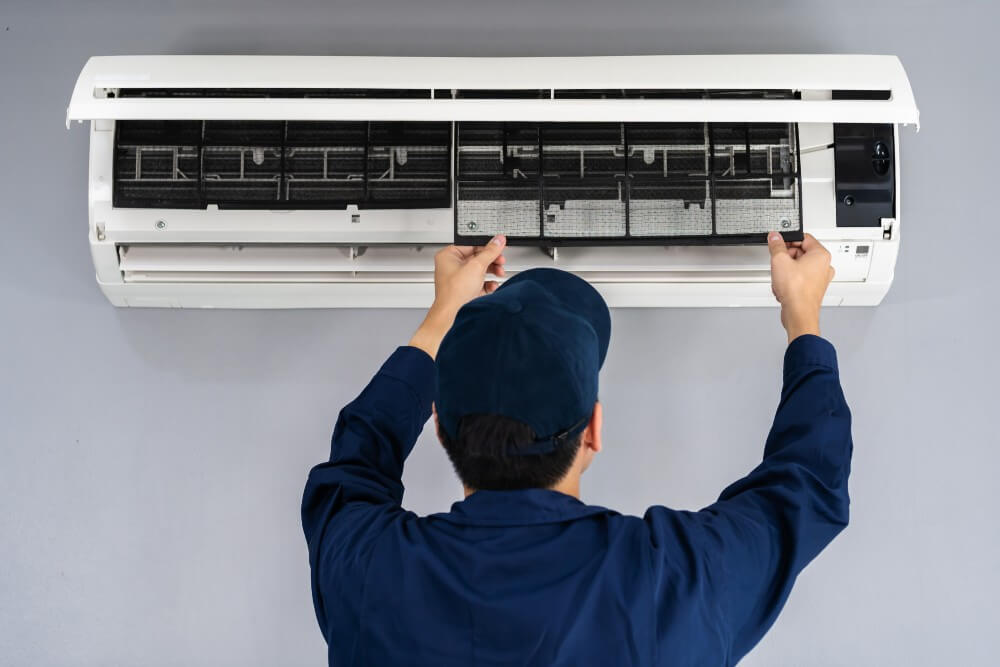
Dirty or blocked filters — filters accumulate dust, pet hair, and airborne particles over time. A clogged filter restricts airflow, forcing the system to work harder to circulate conditioned air. Cleaning or replacing filters is one of the simplest and highest-impact maintenance tasks.
Incorrect refrigerant levels — if a system develops even a small refrigerant leak, its efficiency drops and it has to work harder to achieve the same output. Left unaddressed, low refrigerant levels cause compressor damage. Checking and correcting refrigerant charge is a task that must be carried out by an F-Gas registered engineer.
Degraded components — electrical connections, fan bearings, and coil surfaces all affect efficiency as they age. A thorough annual service identifies components that are beginning to degrade before they cause a breakdown or a measurable drop in performance.
Neglected systems not only consume more energy — they are also significantly more likely to fail during peak demand periods such as heatwaves, precisely when you need them most. Our air conditioning servicing solutions are designed to keep your system operating at its rated efficiency, with scheduled visit options to make this easy to maintain year on year.
The Long-Term Financial Case for High-Efficiency Systems
There is a common misconception that the most energy-efficient systems are only worth considering if you plan to use them heavily. In practice, the efficiency advantage of a higher-rated system compounds over time regardless of usage intensity, because the savings accrue on every hour of operation.
Consider two systems installed in a Somerset home: one with a mid-range SEER rating and one with a premium rating. The premium system may cost £300 to £500 more upfront. Over five years of typical domestic use, the difference in electricity consumption between the two systems can easily exceed that initial price gap — meaning the more efficient system actually costs less in total over its lifetime, even before accounting for its typically longer lifespan and fewer repair requirements.
The benefits of investing in a high-efficiency system include:
- Lower monthly energy bills — the most immediate and measurable benefit, visible from the first full billing period after installation
- Reduced environmental impact — lower energy consumption means a smaller carbon footprint, which matters increasingly to both homeowners and businesses with sustainability commitments
- Greater reliability — premium systems from leading manufacturers are built to tighter tolerances, with better component quality and more comprehensive warranty coverage
- Higher property appeal — energy-efficient climate control is an increasingly valued feature in both residential and commercial property
Choosing the right system for your property, having it correctly sized and installed by a qualified engineer, and maintaining it properly are the three factors that determine whether you realise the full efficiency potential of your investment. Our team at Somerset Air Conditioning can advise on all three, get in touch with our team today to discuss your options.